How to Use
ℹ️ Note Before you start, make sure:
- ScreenOnAuto is installed and its entries appear in Android Auto’s launcher.
- You’ve opened the app once on the phone and granted the permissions it asks for.
The two mirror entries
Android Auto’s app launcher shows two mirror entries. Both mirror the same phone screen — they differ in how the mirror is shown on the car screen:
 ScreenOnAuto ScreenOnAuto
|
 ScreenOnAuto (Legacy) ScreenOnAuto (Legacy)
|
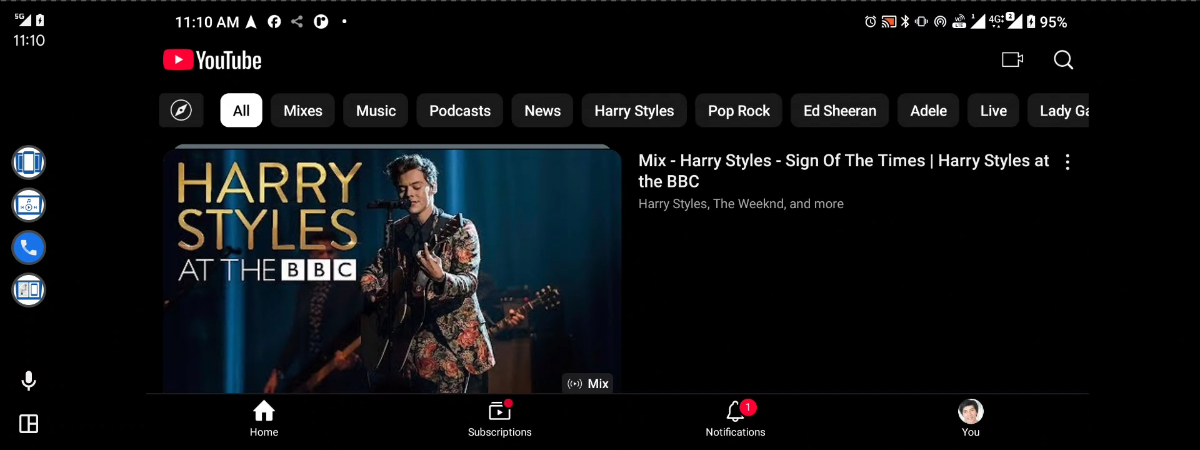
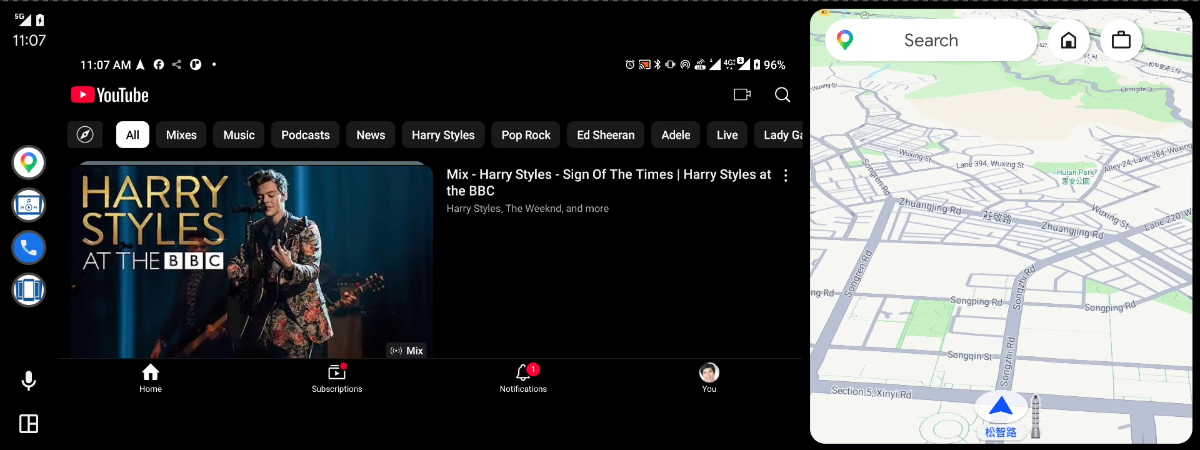
Try both and use whichever works better on your head unit. Both show the same mirror, and you can switch between them at any time — once mirroring is running, opening the other entry shows it right away without asking for permission again.
💡 Tip If you’ve opened ScreenOnAuto (the full-screen entry) before and now want to use ScreenOnAuto (Legacy), open your map app (e.g. Google Maps) on the car screen first, then start the Legacy mirror. This sets the map app back as the car screen’s default map, so map-related functions aren’t taken over by the full-screen mirror.
Start mirroring
With Auto Start Mirror ON (recommended)
- In the app on the phone, turn on Auto Start Mirror (one-time setup).
- Connect the phone to the car and tap a ScreenOnAuto entry
( or
) in the Android Auto
launcher.
-
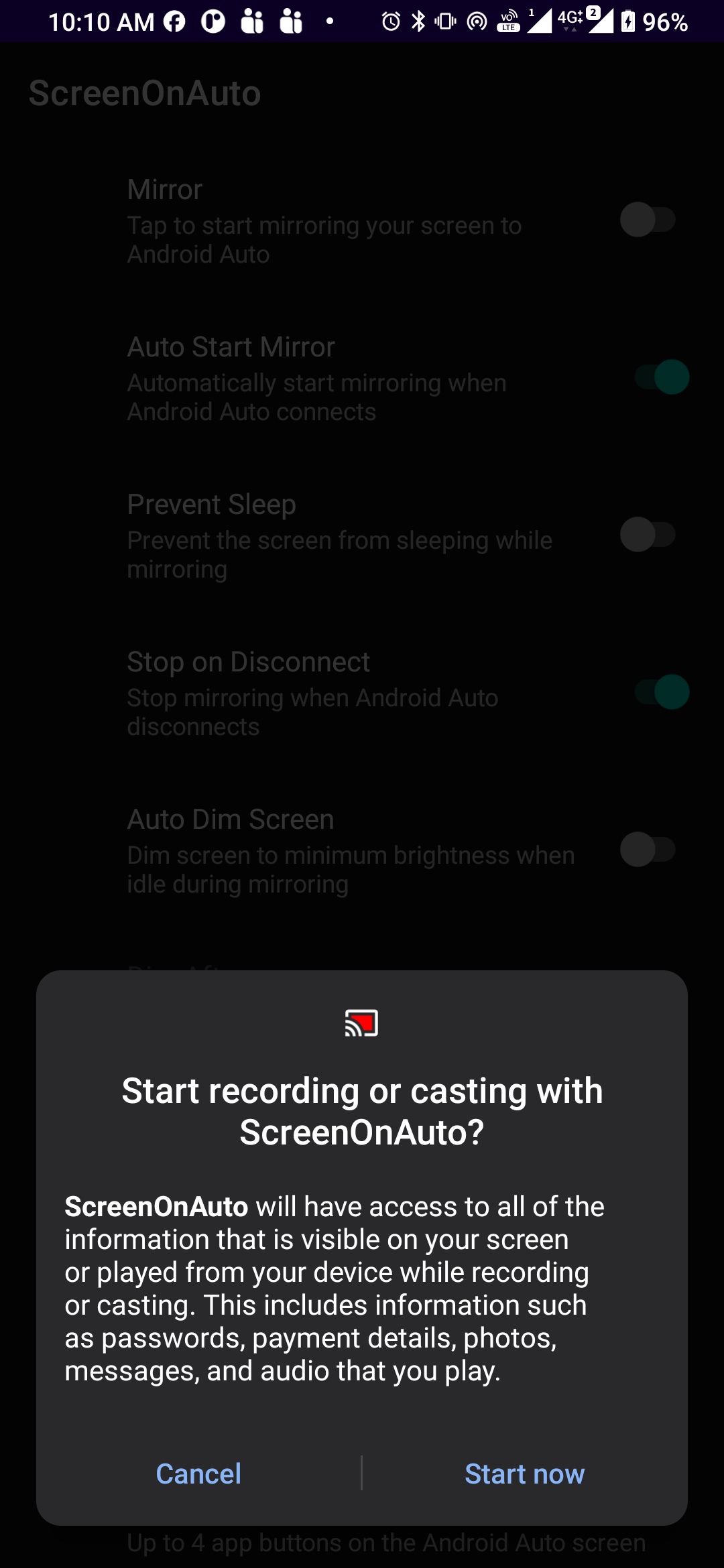
The phone brings up the screen-capture permission dialog automatically — pick up the phone and tap Start now:
-
Your phone screen appears on the head unit:
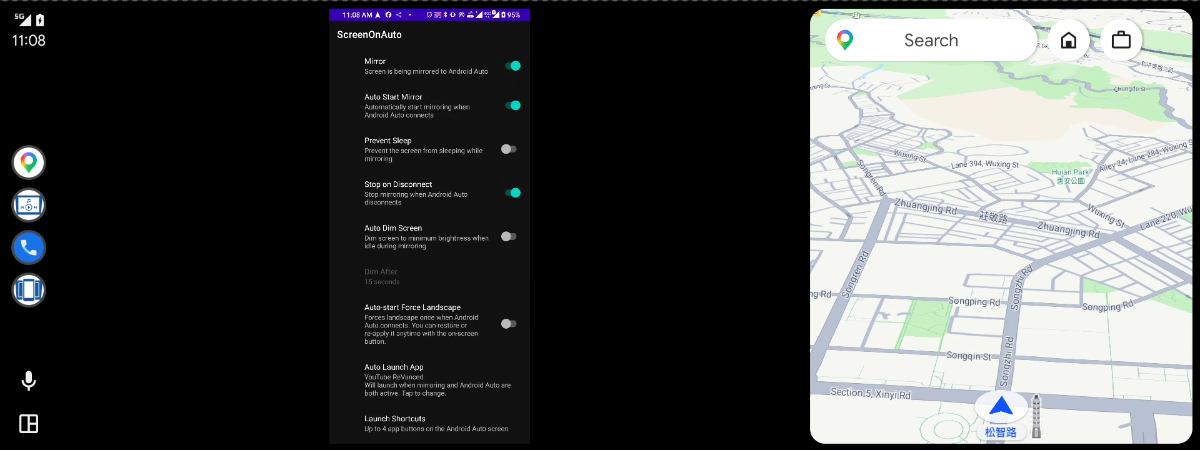
ℹ️ Note The permission dialog is an Android requirement — it appears once each time mirroring starts, not on every screen change. With Auto Start Mirror off, tapping the entry only opens the mirror screen; nothing is captured until you start it yourself.
Starting manually
If you prefer to keep Auto Start Mirror off:
- Open ScreenOnAuto on the phone and turn on the Mirror switch, then tap Start now in the permission dialog.
- On the car screen, open one of the ScreenOnAuto entries — the mirror is already running and shows immediately.
(The order doesn’t matter — you can also open the entry first and flip the Mirror switch after.)
Skipping the permission dialog
Tired of the dialog appearing every time? You can pre-grant the permission once via ADB — see Grant Mirror Permission via ADB.
Stop mirroring
Any of these works:
- Disconnect from the car — mirroring stops automatically (the default Stop on disconnect setting).
- Tap Stop Mirroring on the persistent phone notification.
- Turn off the Mirror switch in the app.
Troubleshooting
Mirroring and display
Entry opens but stays blank
Mirroring hasn’t started yet; check the phone for the permission dialog, or start it via the Mirror switch.
Black bars around the image
The phone and car screens have different aspect ratios; the Force Landscape button on the mirror screen (or Auto-start Force Landscape in the app’s settings) usually fills the screen much better. If thin gaps or cut-off edges remain, fine-tune them with Settings → Advanced → Adjust mirror width / Adjust mirror height (positive pixels pull in a cut-off edge, negative pixels push out to fill a black bar).
Image looks stretched or distorted after the layout changes
This happens when the visible area grows or shrinks in split view. Two settings can fix it:
- Turn on Settings → Advanced → Fixed mirror size. The mirror then keeps its size instead of distorting (part of it may be hidden). Applies to the full-screen ScreenOnAuto entry.
- Turn on Settings → Advanced → Self-drawn mirror (experimental). The app then draws the mirror image itself instead of letting the system scale it, so the image no longer distorts in split view, and the width/height adjustments behave the same whether you set them before or during a connection. It uses slightly more battery and takes effect the next time mirroring starts. Match the phone screen to the car (Privileged Features) fixes the same problem a different way, and the two can be on together.
The Android Auto navigation bar stays on screen
The Android Auto navigation bar on the car screen is drawn by Android Auto itself and cannot be hidden by the app.
Privileged Features (Shizuku / root)
A Shizuku server started via ADB shuts down when you plug into the car
The USB connection puts the phone into accessory mode, which restarts ADB and takes Shizuku with it — wireless debugging goes through the same ADB, so it does not help. Start Shizuku again and ScreenOnAuto reconnects on its own; better still, use the Shizuku-Next fork, whose watchdog service restarts it for you. Root users and wireless Android Auto connections are unaffected.
Waking the screen again
The touchscreen powers down with the panel, so tapping the phone does nothing. Tap the Auto Dim button on the car screen — toggling Auto Dim wakes the screen (turn the button on first in On-screen buttons → Control buttons; it is off by default). Or press the phone’s power button twice, since the first press is what puts the system to sleep. Stopping the mirror or disconnecting Android Auto also brings the screen back.
Last updated: